
- Home
- Athletes’ counter
- Classification
What is Classification
What is Classification
Athletes competing in Paralympic sports have impairments that may place them at a disadvantage. To address this, a classification system has been developed to minimize the impact of these impairments on sporting performance. Classification ensures that the outcome of competition is determined by an athlete’s training, endurance, and tactical skills rather than the degree of impairment. It defines who is eligible to compete and groups athletes into sport classes based on their limitations and functional abilities in a specific sport.
In SAMBO for blind and visually impaired athletes, classification is the foundation of fair and competitive sport, ensuring the grouping of athletes based on functional abilities, promoting inclusion, and maintaining the integrity of the sport.
Fundamentals of Classification
Classification is a key feature of parasport that provides the fundamental structure for fair, reliable, competitive, and meaningful competitions for athletes with disabilities around the world.
Classification across the Paralympic Movement is governed by a central document — the International Paralympic Committee (IPC) Classification Code. It is supplemented by five International Standards, each relating to specific components required for Classification.
The Code contains a clear and authoritative statement of the purpose of classification and serves as a set of rules and procedures designed to ensure the highest possible quality of classification.
Learn about the essential foundations of Paralympic classification in the IPC online course.
Fundamentals of Classification in Sambo for Blind and Visually Impaired Athletes
To participate in international competitions in sambo for blind and visually impaired athletes organized by the International SAMBO Federation (FIAS), athletes must be assigned a sport class and a sport class status. Before a sambo athlete is assigned a sport class, they must undergo an evaluation process to confirm the presence of an eligible impairment and to verify that their impairment meets the minimum criteria:
The athlete must have a clinically diagnosed underlying health condition (e.g., Stargardt disease, retinitis pigmentosa, diabetic retinopathy, glaucoma), affecting the structure or function of the eye, optic nerve, optic chiasm, post-chiasmatic visual pathways, or the visual cortex of the brain, which has resulted in reduced visual function or no vision at all, even with the best possible refractive or optical correction.
The athlete must also meet the Minimum Impairment Criteria (MIC) for visual impairment. These criteria can be found in the FIAS Classification Rules.
Classification Rules in Sambo for Blind and Visually Impaired Athletes
Classification comprises four main assessment stages, each of which will be conducted by FIAS. The first stage of classification is based on the analysis of the athlete's diagnostic information and always precedes the Evaluation Session. Stages 2–4 of the assessment are conducted within a single Evaluation Session in a controlled, non-competitive environment. The Sport Class Assessment is conducted concurrently with the MIC Assessment.
The decision-making process follows four sequential stages in the order set out below.
Stage 1 of Classification. Underlying Health Condition Assessment
Underlying Health Condition Assessment. Diagnostic Information.
To start the Classification process, the Athlete must provide their National Federation with all relevant Diagnostic Information needed by FIAS to confirm the presence of an Underlying Health Condition (UHC) and an Eligible Impairment.
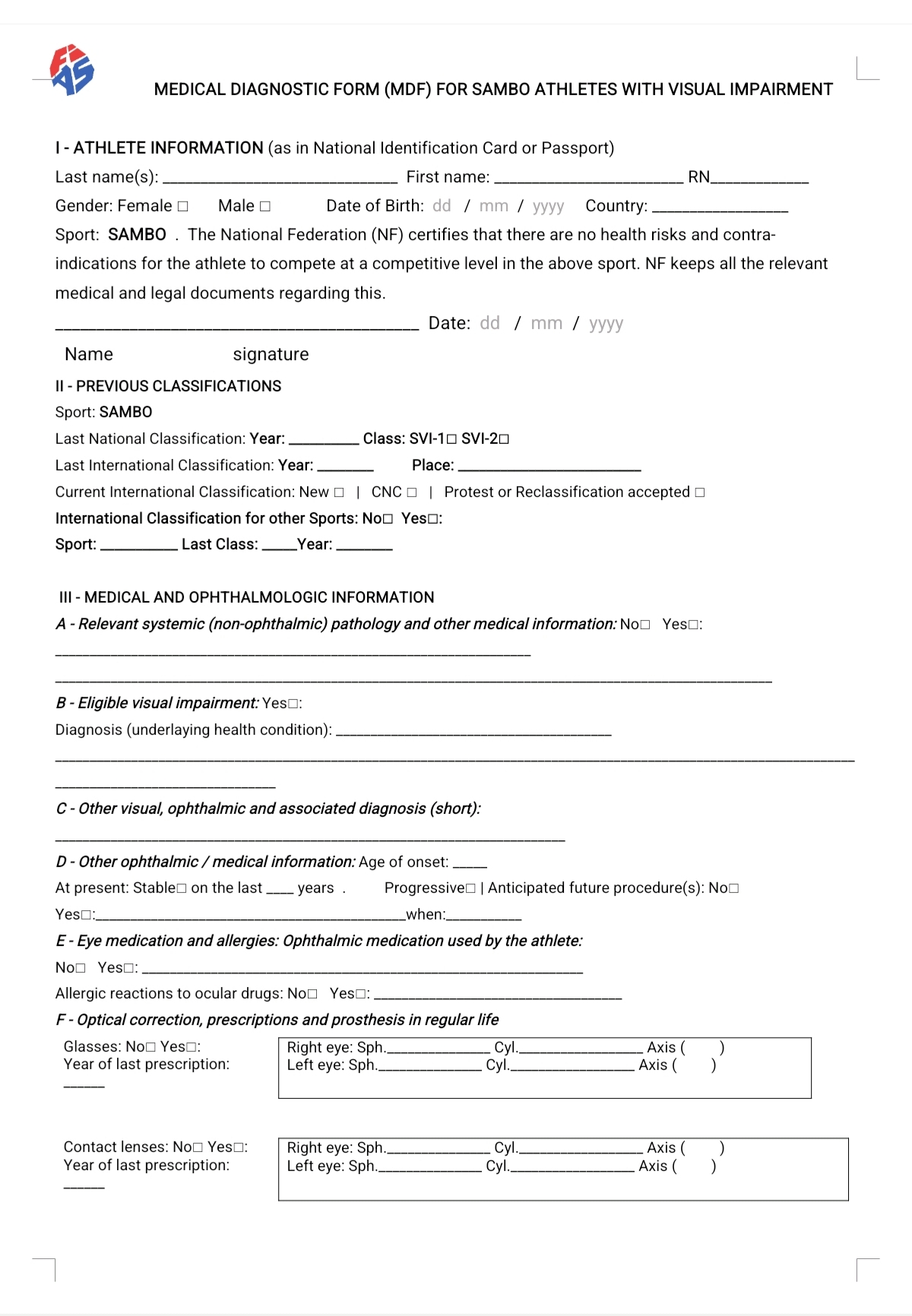
The presence of an Underlying Health Condition (UHC) is determined at Stage 1 solely on the basis of the Diagnostic Information provided by the Athlete’s National Federation. This includes the completed Medical Diagnostic Form (MDF), together with all supporting medical reports and diagnostic test results.
The UHC must be a diagnosed, permanent health condition that affects the structure or function of the eye, optic nerve, optic chiasm, post-chiasmal visual pathways, or visual cortex of the brain.
The MDF must be accompanied by objective diagnostic test results confirming the reported UHC and the corresponding impairment of the visual system, as well as an ophthalmological Medical report.
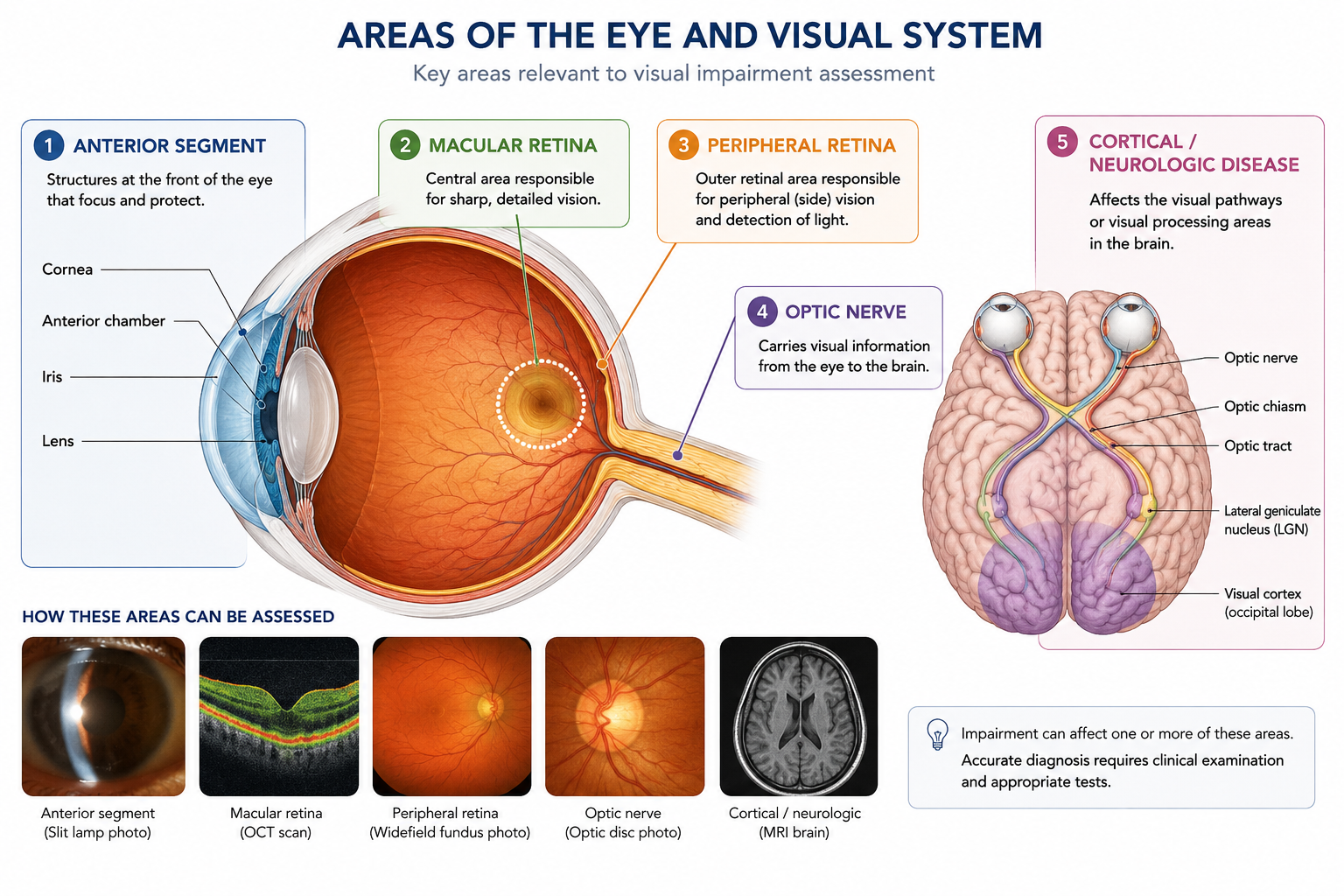
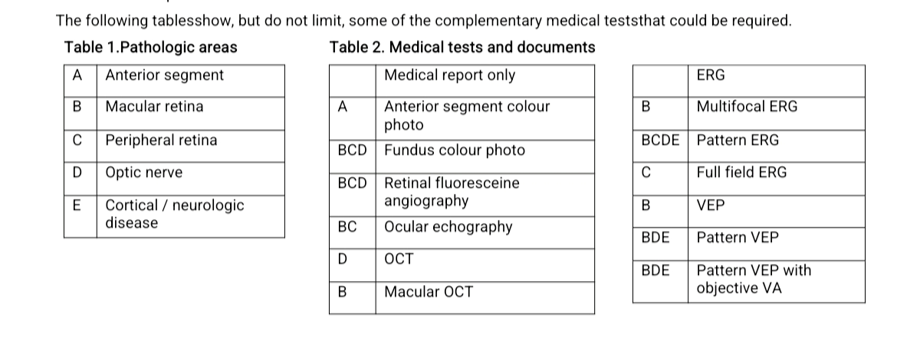
The Medical Diagnostic Form (MDF) includes an instruction table showing which areas of the eye or visual system may be affected and which medical examinations or documents are appropriate for objectively confirming the corresponding pathology, depending on the clinical condition and specific medical circumstances.
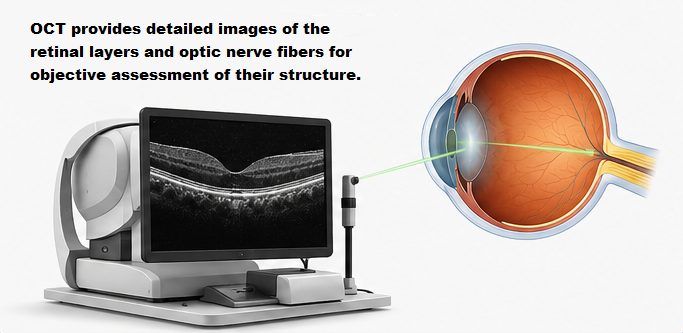
Optical coherence tomography (OCT) is the primary objective method for assessing the structures of the posterior segment of the eye, including the retina and optic nerve. If OCT cannot be performed or the image quality is insufficient for diagnostic purposes, the specific medical reason for the limitation must be stated. Such reasons may include significant opacity of the optical media or inability to maintain stable fixation.
In such cases, other available objective diagnostic evidence confirming the presence of the impairment must also be provided, or results of other objective examinations.
Visual acuity and visual field measurements are also recorded in the Medical Diagnostic Form (MDF). At this stage of the Classification process, these measures are considered quantitative characteristics of the visual impairment. They help assess the severity of the impairment and must be consistent with the medical evidence provided and the identified structural changes.
Visual impairment caused solely by refractive errors is not taken into consideration when making the expert decision.
Based on the information provided, the UHC Assessor determines whether the Athlete has the UHC stated in the MDF and whether the available medical information and diagnostic results are sufficient to confirm its presence.
If the information provided is insufficient or outdated, the UHC Assessor may request additional information from the Athlete’s National Federation.
An Athlete determined by the UHC Assessor as “Not Eligible – Underlying Health Condition (Re-evaluation)” or “Not Eligible – Underlying Health Condition”:
is not eligible to participate in official SAMBO competitions; and
must disclose this designation when undergoing further Classification or Classification in another sport.
This designation is recorded in the official World SAMBO Blind and Visual Impaired International Classification Master List.
This designation may be automatically recognized by other International Federations in their respective sports, at their discretion.
Important! If an Athlete is found not eligible, this does not question or determine the presence of a disability, but is a ruling on the eligibility of the Athlete to compete in SAMBO.
Stage 2 of Classification. Eligible Impairment Assessment
Eligible Impairment Assessment.
The Assessment of Eligible Impairment is conducted to verify that the Athlete has an Eligible Impairment that is consistent with one or more Underlying Health Conditions reported during the first stage of Classification, and that there are no inconsistencies with the reported Underlying Health Condition(s).
The Assessment of Eligible Impairment is always conducted in person.
Objectively identifiable changes in the structures of the eye and visual system that have resulted in impaired visual function are assessed.
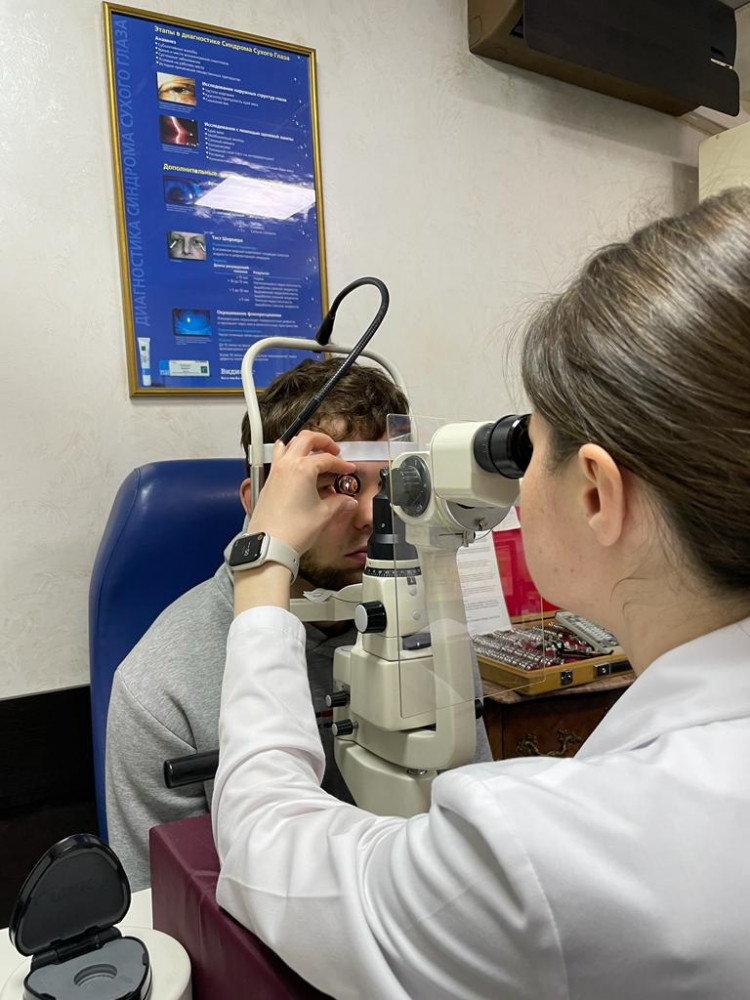
Autorefraction is performed to assess the effect of refractive error on visual acuity. Refractive errors alone are not considered a basis for Classification.
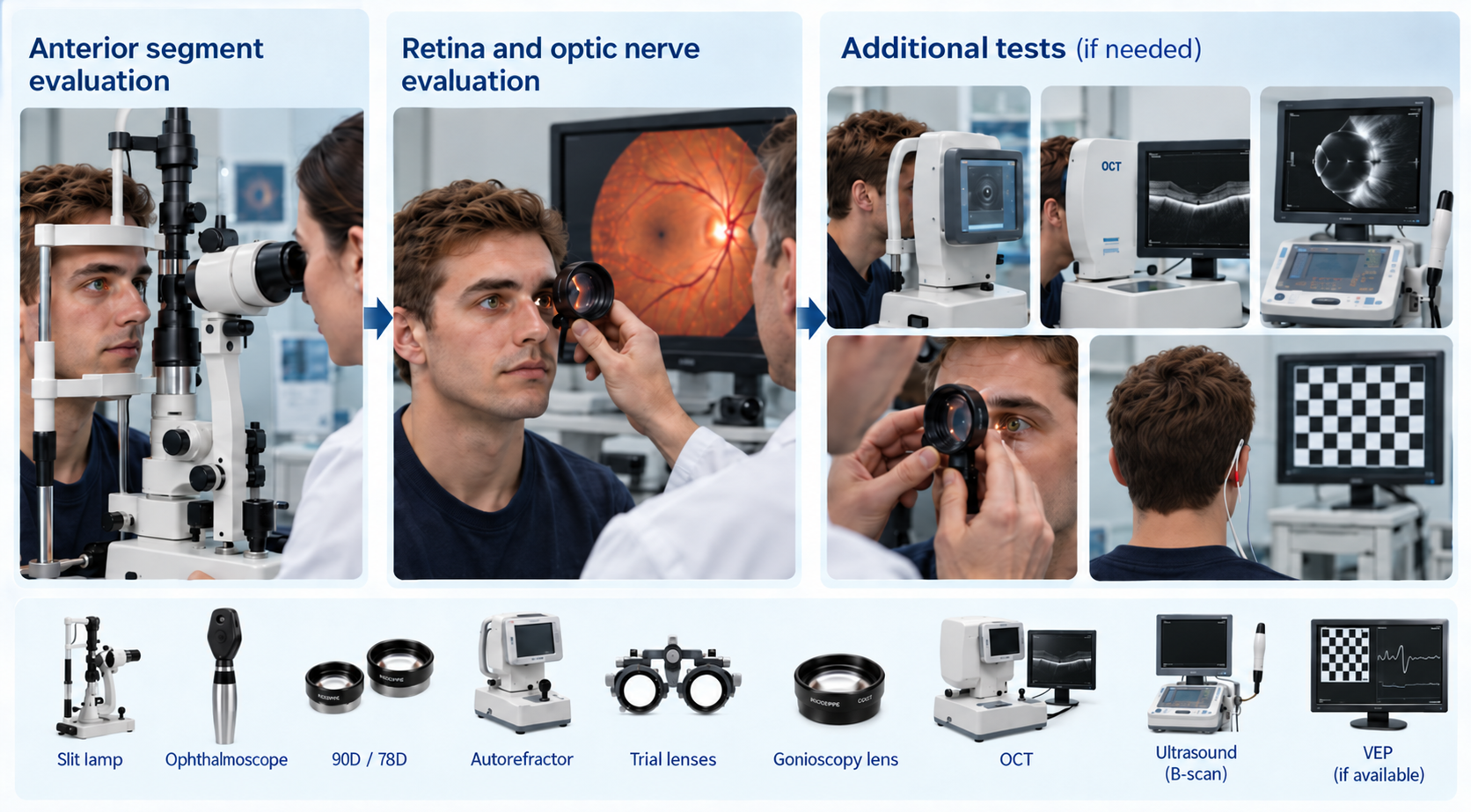
The assessment is performed using mandatory basic diagnostic equipment, including a biomicroscope, diagnostic lenses, a trial lens set and trial frame, an autorefractor, an ophthalmoscope, and a lensmeter (focimeter).
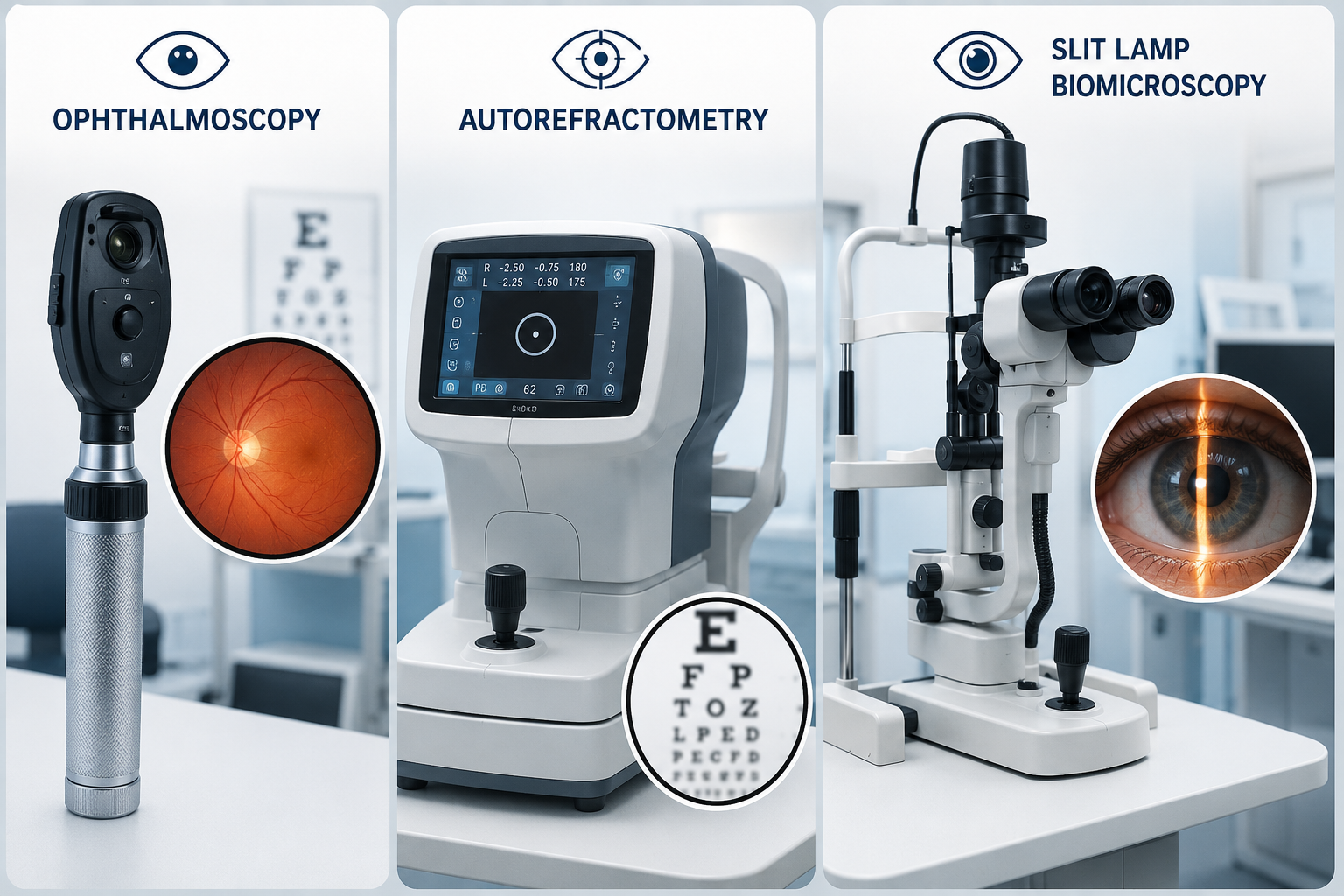
The Classification Panel may use eye drops to dilate the pupils during the assessment, if necessary.
If necessary, the Classification Panel may additionally use OCT, B-scan ultrasonography, and other available assessment methods. These examinations are performed to obtain a complete and objective picture of the Athlete’s visual system.
In some cases, the physician may need to perform additional or different scans or examinations to assess specific eye structures more accurately or to clarify the results obtained. This is a normal part of ophthalmological assessment and allows the Classification Panel to conduct a complete and accurate assessment.
The results may also be needed to determine whether the Athlete will require an assessment in the future and, if so, when it may be required.
If the Classification Panel determines that the Athlete has an Eligible Impairment consistent with one or more Underlying Health Conditions reported during the first stage of Classification, and identifies no inconsistencies with the reported Underlying Health Condition(s), the Athlete proceeds to the third stage of Classification.
Stages 3 and 4 of Classification. Sport Class Assessment and MIC Assessment
The fourth stage of Classification, the Sport Class Assessment, is conducted together with the third stage, the assessment of compliance with the Minimum Impairment Criteria (MIC).
This is because both the MIC assessment and the determination of the Sport Class are based on the Athlete’s visual acuity and visual field results.
The Classification Panel obtains these results during the MIC assessment.
At the third stage of Classification, it is assessed whether the Athlete’s visual impairment meets the Minimum Impairment Criteria (MIC) established by the Classification Rules.
The Minimum Impairment Criteria include visual acuity and visual field, assessed with the best possible optical correction in the better-seeing eye.
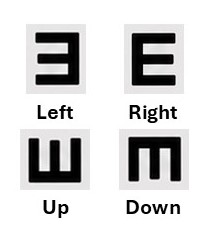
Visual acuity is assessed by the Athlete’s ability to identify the direction of the open side of the “E” (tumbling E) optotypes from the standardized Berkeley set.
Only the following optotypes are used: E 25M, E 40M, E 63M, and E 100M. Other types of optotypes, including letters, numbers, or symbols, as well as chart-based or projection tests, are not used.
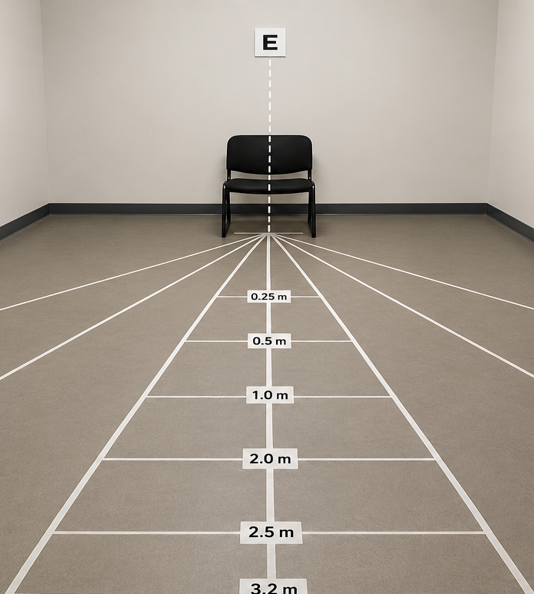
The testing distance is adjusted by moving the optotype along a marked guide. Each mark on the guide corresponds to a specific distance between the plane of the optotype and the Athlete’s eye. The minimum testing distance is 0.25 m.
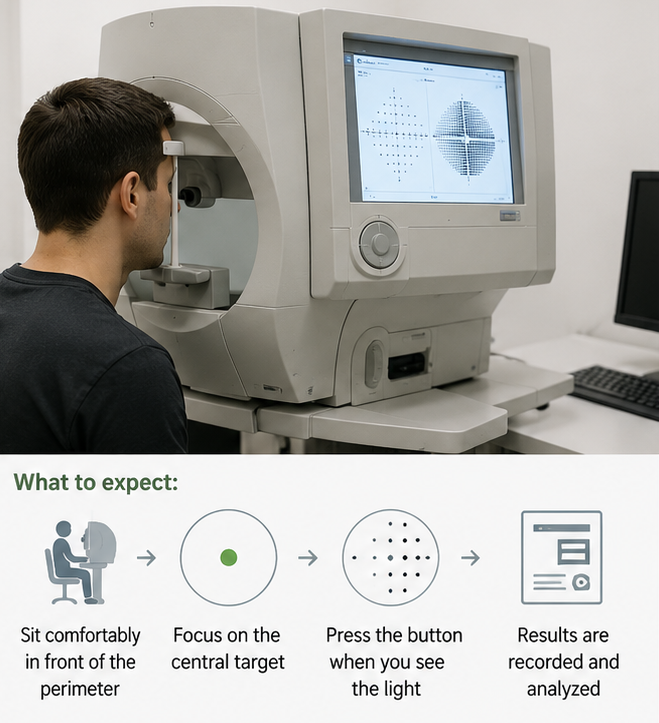
Visual field assessment is performed using validated perimetric systems: Goldmann Visual Field Perimeter (stimulus III/4e), Humphrey Field Analyzer (FF120 pattern, stimulus III/4e, 10 dB), Octopus Interzeag (G 07 pattern, stimulus III/4e, 10 dB), or equivalent systems.
The assessment is performed separately for each eye, with the Athlete’s head positioned to provide the best visual perception.
Classification Form for Athletes with Visual Impairment
Allocation to Sport Classes
The sport class is determined by the functional ability of sambo athletes to perform the actions required in sambo that are aimed at achieving a sporting result — winning a bout — taking into account the specific nature of their visual impairment. This is not an assessment of the athlete’s skill level, but rather of their functional ability to perform these actions.
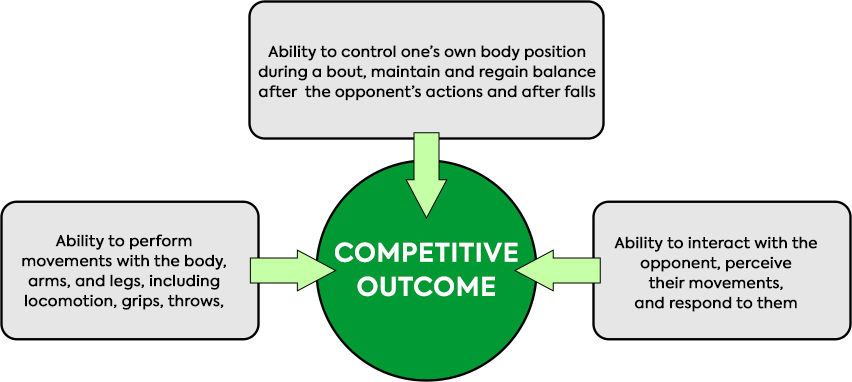
Physical and intellectual abilities required for athletes to achieve results in sambo. Theoretical model.
The result in sambo is determined by the physical and intellectual abilities required to execute effective throws, grips, and holds, control distance, and analyze the opponent’s actions. Differences in reaction time, spatial control, and the ability to maintain balance under vestibular load have a significant influence on the outcome of the bout.
The functional capacity of vision influences the technique and dynamics of the bout. Vision plays an important role in perceiving the opponent’s actions, orienting one’s own body, and maintaining balance, which in turn determines the effectiveness and/or methods of performing technical actions.
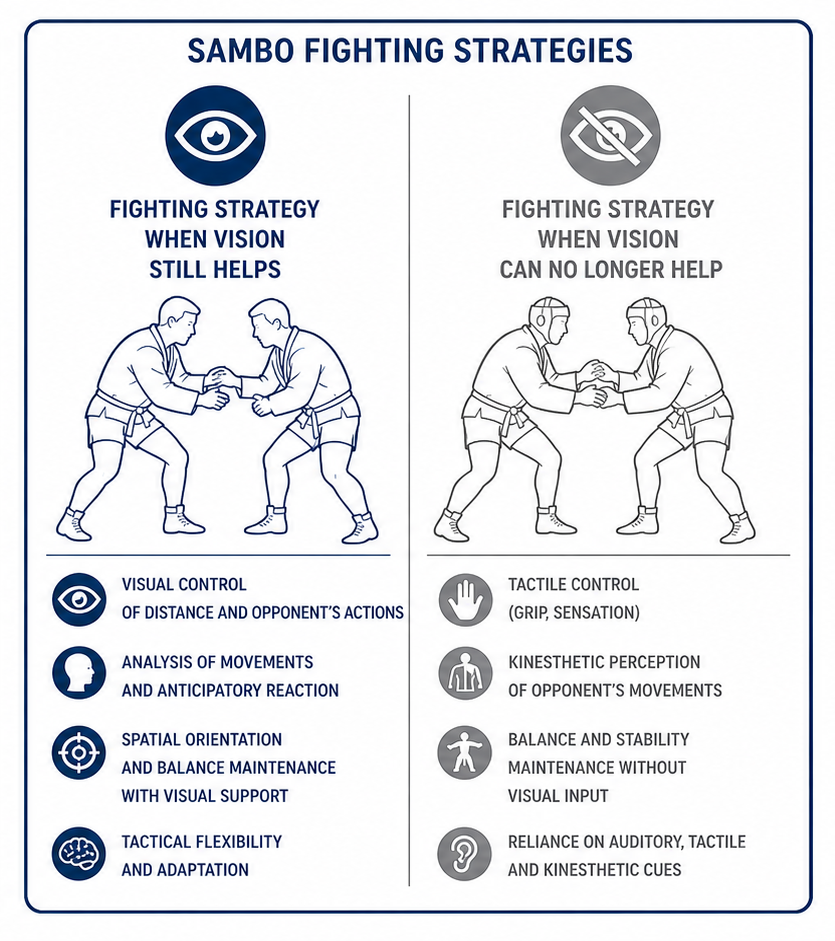
To ensure equal conditions and minimize the impact of visual impairment on the outcome of a bout, athletes are divided into two sport classes: SVI-1 and SVI-2.
In the SVI-1 sport class, blind sambists compete. These are athletes with the most severe visual impairments, including those who are totally blind and those with residual vision. In this sport class, athletes compete wearing special helmets with inserts in the eye area to protect against accidental blows and collisions, as well as to standardize the conditions for competition.
Medical Review
A request for a medical review must be submitted by the National Federation if an athlete who has previously been assigned a sport class experiences a change in the nature or degree of visual impairment, or if there is a need for a reassessment of an athlete who was previously found not to meet classification requirements (Not Eligible).
For example, a Medical Review request would be appropriate where the effect of surgery, a new medication or device, or some other medical procedure has resulted in changes to an Athlete’s ability to execute the specific tasks and activities relevant to SAMBO. A request may also be appropriate where an Athlete has a new Underlying Health Condition.
Classification Master List
FIAS maintains a Classification Master List of athletes, which includes name, gender, country, sport class, and sport class status. This list includes athletes eligible to participate in international competitions. Any athlete not included in the World Classification List must undergo the classification evaluation process.
Protests
The rules for submitting protests regarding an athlete’s sport class can be found in the Classification Rules, and the protest submission form can be downloaded here:
Classification Protest Form for Sambo Athletes with Visual Impairment
For all questions related to classification, please contact us via email: newmoscow80@yandex.ru
-
"Overcoming" 5 MayFIAS Backs Adaptive SAMBO Research Project for Children with Autism
-
"Overcoming" 29 AprilScott BAILEY: “What really stood out was the brotherhood you see through sport”
-
Did you see it? 18 DecemberSAMBO Federation Sri Lanka Meets with Minister of Youth Affairs and Sports
-
Personalities 27 OctoberIslam Makhachev celebrates his 35th birthday
-
Competitions 26 OctoberWorld SAMBO Championships’ 2026 guidebook is now available in the FIAS calendar
-
Federations 23 OctoberSAMBO in Indonesia: Salatiga Tournament Highlights Regional Growth of the Discipline
- Watch World Sambo Championships 2022. Bishkek, Kyrgyzstan 17 November 2022
-
Personalities 27 OctoberIslam Makhachev celebrates his 35th birthday
-
Competitions 26 OctoberWorld SAMBO Championships’ 2026 guidebook is now available in the FIAS calendar
-
Federations 23 OctoberSAMBO in Indonesia: Salatiga Tournament Highlights Regional Growth of the Discipline