
Tayla Ford: “Refereeing in SAMBO was more nerve-racking than competing at the Olympics”
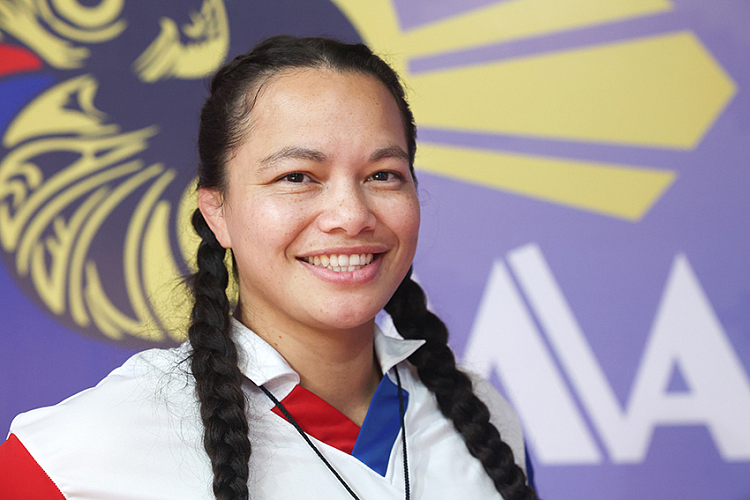
At the 2026 Asia and Oceania SAMBO Championships in the Philippine capital, the refereeing team welcomed a notable newcomer: Tayla Ford, a well-known figure in freestyle wrestling for New Zealand and now Australia. Ahead of the tournament, she completed a SAMBO referee seminar before officiating on the mat for the first time in an official capacity. Tayla shared her impressions of the sport with the FIAS website.
More nerve-racking than the Olympics
Ford describes her refereeing debut in SAMBO, without exaggeration, as one of the more nerve-racking experiences of her career.
“I was quite nervous. I've already told a few of the referees that this is scarier than the Olympics,” she admitted. According to Tayla, the difference in feeling comes down to responsibility: on the wrestling mat, she only answered for herself, whereas refereeing carries an entirely different weight.
“In wrestling, it was just me – everything depended on me alone. Here, it's about the athletes, and you don't want to ruin their chances with the wrong call. That feeling doesn't leave you the whole time you're out there making decisions,” she said.
Her path into refereeing began with an invitation from Savely Timofeev, President of the SAMBO Federation of Australia. “Savely talked me into it, and he sold it very well – well enough that it made me want to try,” Ford recalled.
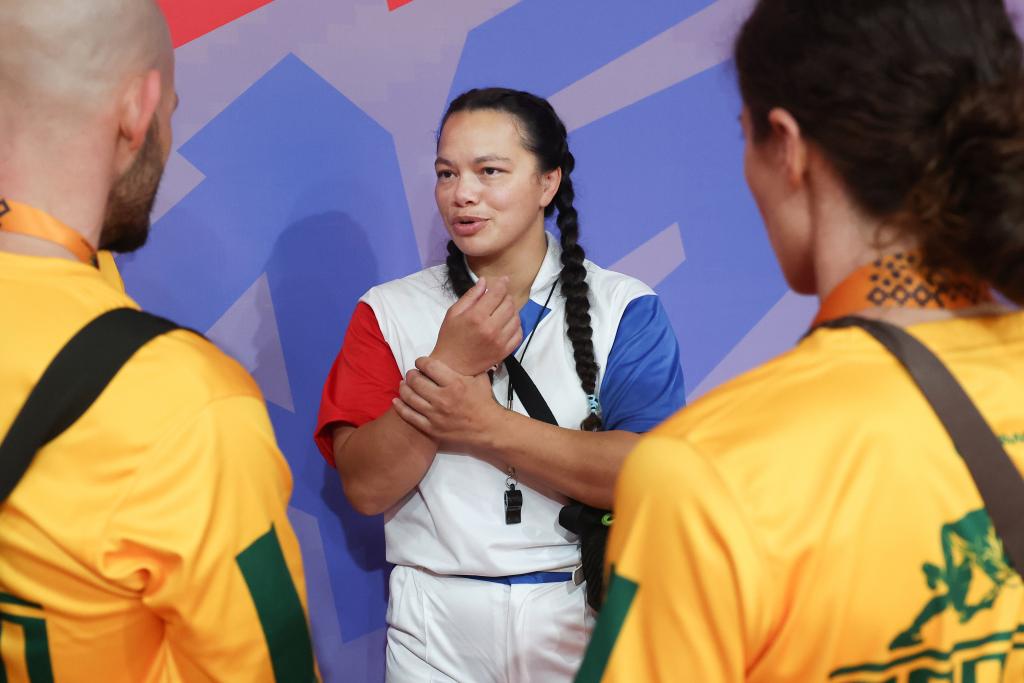
She got her first taste of officiating at a national Beach SAMBO competition, which turned out to be easier than she had expected. The classic disciplines proved a different matter altogether: “In Sport and Combat SAMBO, there turned out to be so much more to it – there are so many gestures to learn. But I'm not one to look for the easy way in, so I'm having a lot of fun with it.”
Wrestling and SAMBO: what's shared, what's different
Drawing on her long career in freestyle wrestling, Tayla Ford drew detailed comparisons between the two sports' rules, noting more differences than she had anticipated.
“In SAMBO, red is on the referee's right shoulder and blue on the left. In wrestling, it's the opposite. A bout-ending throw in SAMBO doesn't even register as a score in wrestling. We count points scored from the knees in wrestling, but not here. Wrestling also has turnovers, which SAMBO doesn't have,” she listed. Ford also pointed to a visual distinction: wrestling referees wear black, while SAMBO referees wear white. “You have to look after the white uniform – I've already got mine dirty and had to scrub it clean in my hotel room. In black, I suppose the dirt just doesn't show as much,” she said with a laugh, adding that despite the practicality argument, the white SAMBO referee uniform simply looks smarter.
Tayla's connection to Sport SAMBO goes back further than her officiating career, even without any competitive experience: as a child, while still living on New Zealand's South Island, she trained briefly in SAMBO with a coach. Years later, she was invited to compete as an athlete, but the timing clashed with her wrestling schedule. “So this is actually my first real involvement – as a referee,” she explained, not ruling out a future turn as a SAMBO competitor once her wrestling career and, as she put it, plans for more children are behind her.
Manila with a baby in tow
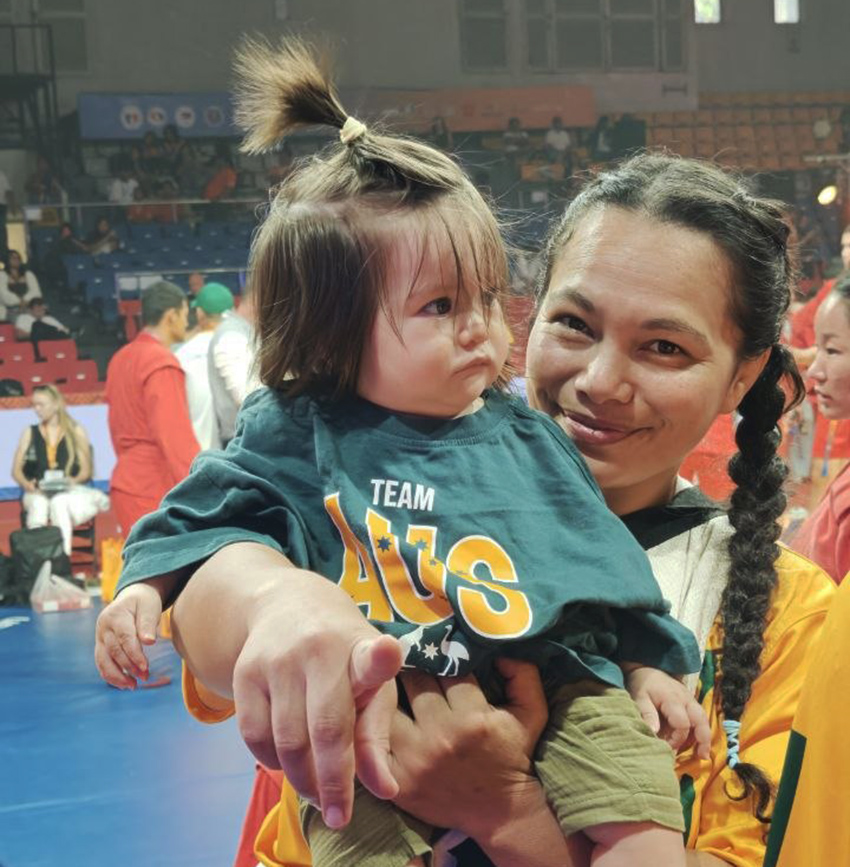
Ford travelled to the Philippines with her eight-month-old son and her mother, whose support allowed her to focus fully on refereeing. Beforehand, she had spent ten days in Japan, where Australia's women's wrestling team was training under her guidance as one of the squad's head coaches. “I say yes to things first and figure out how to make them happen later,” she said with a laugh, describing her general approach to organizing trips like this one.
Principles of refereeing: fairness, precision, unity
Asked about the key qualities of a SAMBO referee, Tayla Ford answered without hesitation: “Fairness, precision, and I think unity – because there are three of us referees plus a deputy chairman of the refereeing panel, and we have to work as a team and be united in our decisions, so that they're fair, precise, and let the athletes move forward properly.”
She said support from more experienced colleagues, along with feedback after bouts, has helped her progress quickly: “I already trust my own calls more – I'd say I get it right around 80% of the time. And if I get something wrong in the other 20%, I know the panel's final decision will be fair, because it's made by majority and I'm working alongside the best referees. It also really matters that I get support and feedback that helps me improve.”
SAMBO's future in Australia
Ford also reflected on SAMBO's growth prospects in Australia, drawing a parallel with wrestling's own trajectory. “Like wrestling, it's a minority sport. But the more exposure SAMBO gets – the same way wrestling has gradually built up its following – the more people will start to take an interest and give it a try,” she said.
In Tayla's view, SAMBO could hold particular appeal for practitioners of Brazilian jiu-jitsu: “Unlike a lot of grappling disciplines, SAMBO has limited time to complete a technique, so you have to go straight for the finish. That could be a good incentive for BJJ athletes to give SAMBO a try.”
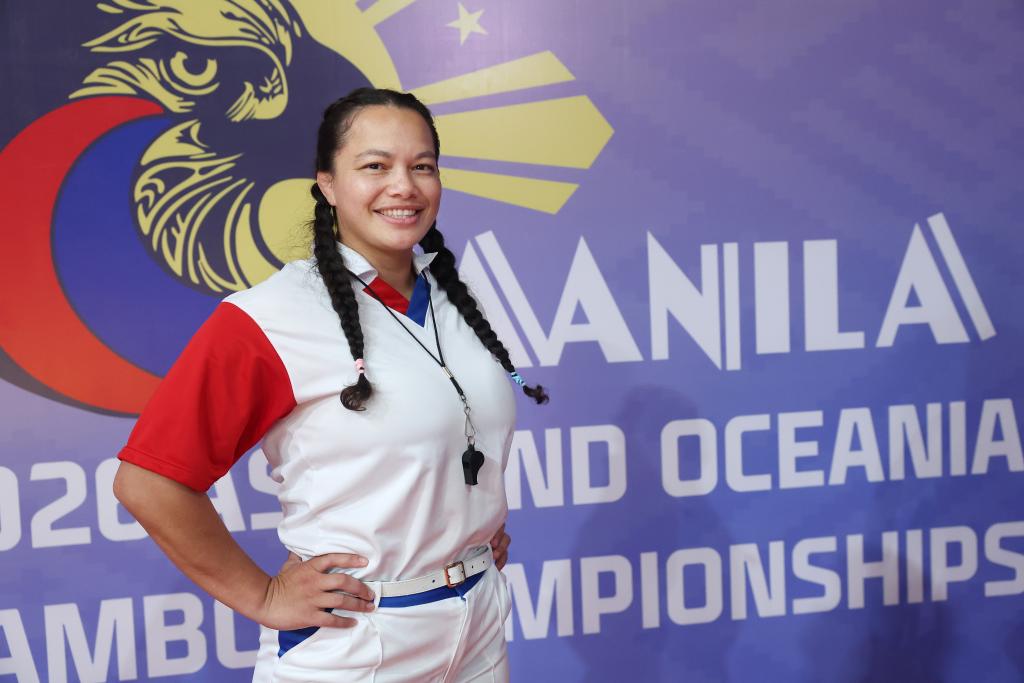
Tayla Ford also touched on the sport's Olympic prospects. She noted that including the discipline in the Brisbane 2032 program would be a significant milestone – particularly given that Combat SAMBO could become one of the few striking-based combat sports on the Olympic stage, while Blind SAMBO would be a notable addition to the Paralympic program.
“It would be great to have a sport like that on the program – one that combines elements of wrestling, judo and, I think, kickboxing. It's an interesting mix,” she concluded.
---
Tayla Ford is a New Zealand-born wrestler and the first woman from her country to compete in wrestling at the Olympic Games (Paris 2024), as well as a two-time Commonwealth Games bronze medallist (Glasgow 2014, Birmingham 2022). Today, she serves as one of the head coaches of Australia's national wrestling team and, this year, has stepped onto the mat in a new role as a SAMBO referee.
-
"Overcoming" 5 MayFIAS Backs Adaptive SAMBO Research Project for Children with Autism
-
"Overcoming" 29 AprilScott BAILEY: “What really stood out was the brotherhood you see through sport”
-
Did you see it? 18 DecemberSAMBO Federation Sri Lanka Meets with Minister of Youth Affairs and Sports
-
Official 13 OctoberNew lessons for Levels 2 and 3 now available on the FIAS Belt System website
-
Anti-doping 12 OctoberFIAS Calendar Introduces New ILA Designation. What Does It Mean?
-
Federations 9 OctoberNiger holds third national SAMBO Championships as federation marks 10th anniversary
- Watch World Sambo Championships 2022. Bishkek, Kyrgyzstan 17 November 2022
-
Official 13 OctoberNew lessons for Levels 2 and 3 now available on the FIAS Belt System website
-
Anti-doping 12 OctoberFIAS Calendar Introduces New ILA Designation. What Does It Mean?
-
Federations 9 OctoberNiger holds third national SAMBO Championships as federation marks 10th anniversary