
Alsu NASYROVA: “The Key Is to Stay Unpredictable”
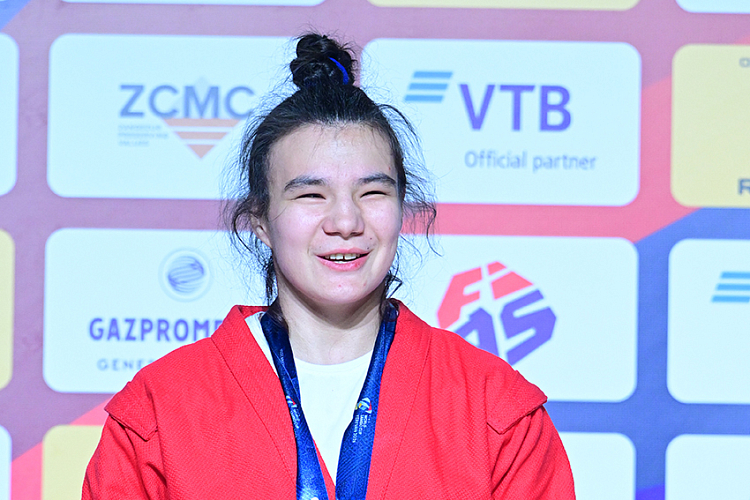
Blind SAMBO athlete Alsu Nasyrova on her World Cup gold, 143 seconds on the mat, and her coach's relentless eye for detail.
At the World SAMBO Cup in Yerevan, Alsu Nasyrova made history. She became the first visually impaired Russian woman to claim gold at a major international SAMBO competition – and she did it in emphatic fashion, finishing all three of her bouts before the time limit. Her total time on the mat: 143 seconds. As her coach Valentin Pegov noted with some amusement, she spent considerably longer in the doping control room.
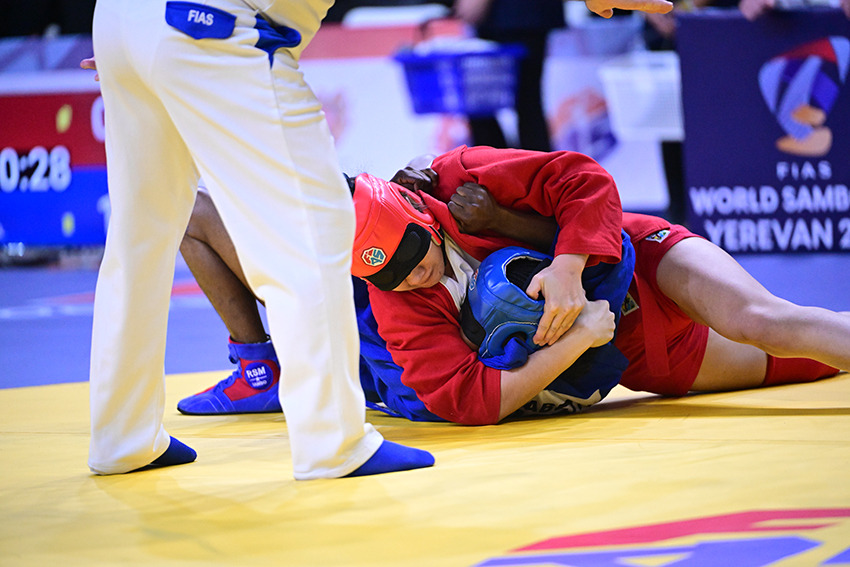
For Nasyrova, the significance of the win goes beyond a personal milestone. She sees the very existence of international competition for women with visual impairments as a major step forward – one she hopes will encourage athletes in Russia and beyond to train, to develop, and to believe that results like hers are within reach.
The national anthem, played in her honour for the first time at this level, left a deep impression. “You feel this sense of pride,” she said – “for yourself, for your people, for those close to you, for your whole country.” It was, she admitted, unlike anything she had felt before.
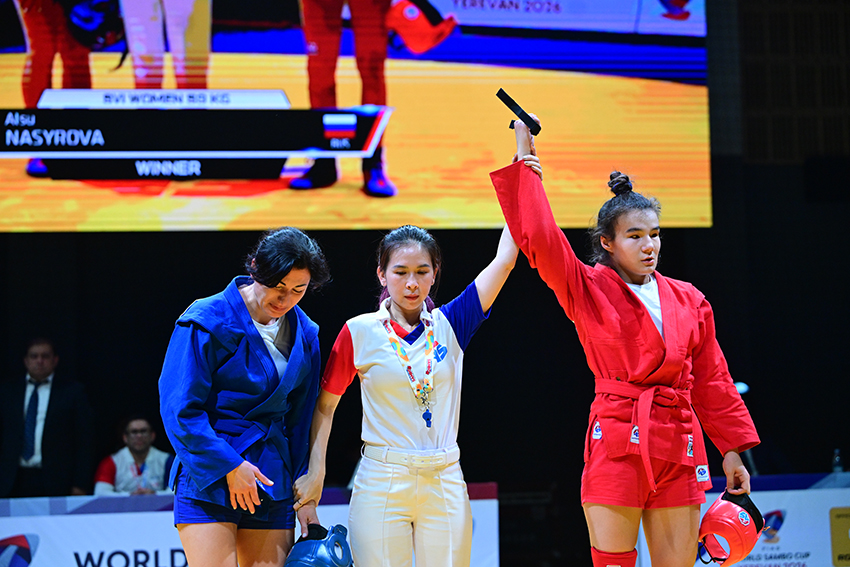
Her dominant scoreline did not reflect weak opposition, she was quick to point out. All her opponents were capable athletes. What genuinely surprised her was the speed of it all – on the mat, the time had felt much longer. Speed, though, was never the goal. “What matters is to act with awareness and purpose,” she explained. “Not to rush for the sake of rushing.”
The tactical thread running through all three bouts was variety. A hip throw in the quarterfinal, a backward trip in the semifinal, a forward trip in the final. “The key,” she said, “is to stay unpredictable.”
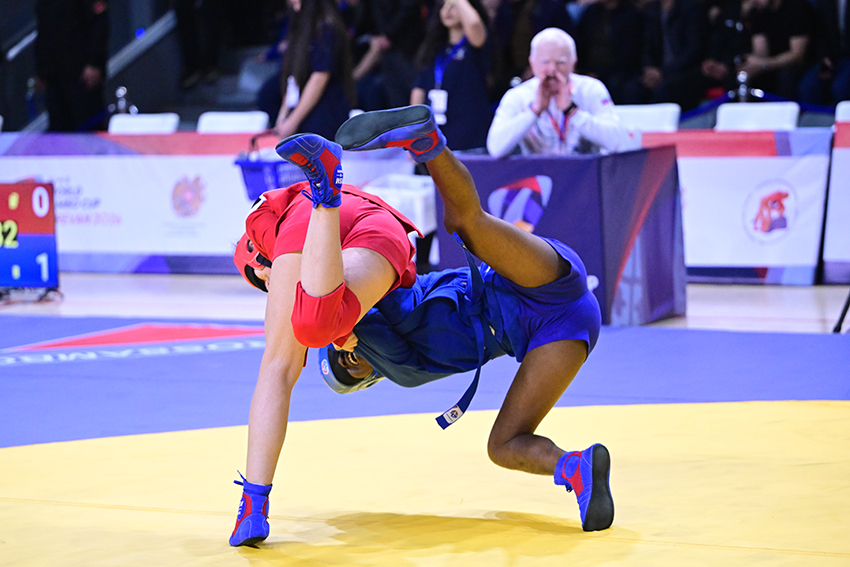
In SAMBO for visually impaired athletes, the coach at the mat-side plays a role that extends well beyond strategy. At one point during the tournament, Nasyrova lost her bearings – and it was Pegov's shout that her opponent was stepping forward that allowed her to reorient instantly and execute the right technique. “It sounds like a small thing,” she acknowledged, “but the right cue at the right moment can completely change what happens next.”
Reading an opponent, without the ability to see her, comes down entirely to touch. Tension in the grip, a faint tremor in the hands – these can tell you a great deal about how someone is feeling. Nasyrova uses that information not to intimidate, but to stay focused on her own game plan.
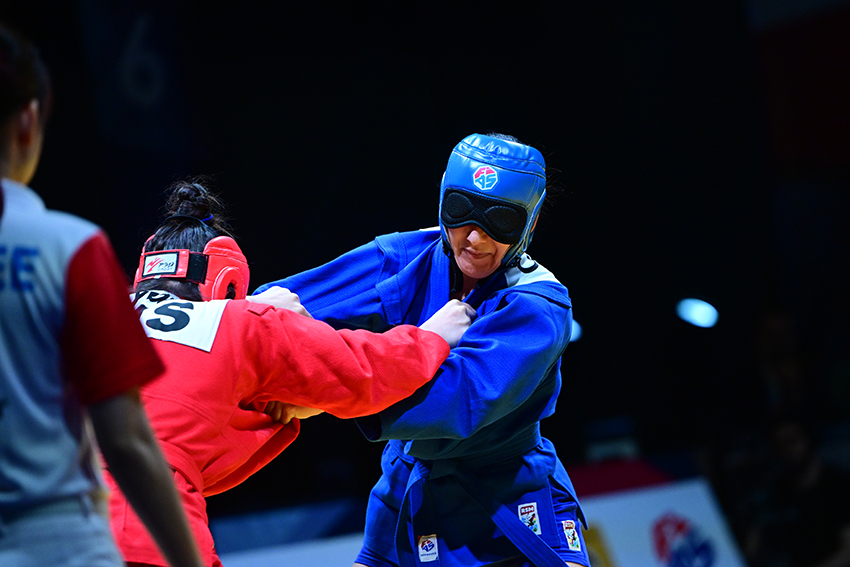
Throughout the tournament, Pegov remained calm – and Nasyrova says that is entirely by design. He knows his own anxiety can transfer to his athletes, so his composure becomes a tool in itself. “He's not just a tactical coach,” she said. “He's an excellent psychologist.”
Even so, three total victories were not enough to escape a post-competition debrief. “Valentin Alexeyevich will always find something to critique,” she laughed – adding that analyzing mistakes while the adrenaline is still running is a non-negotiable part of how they work.
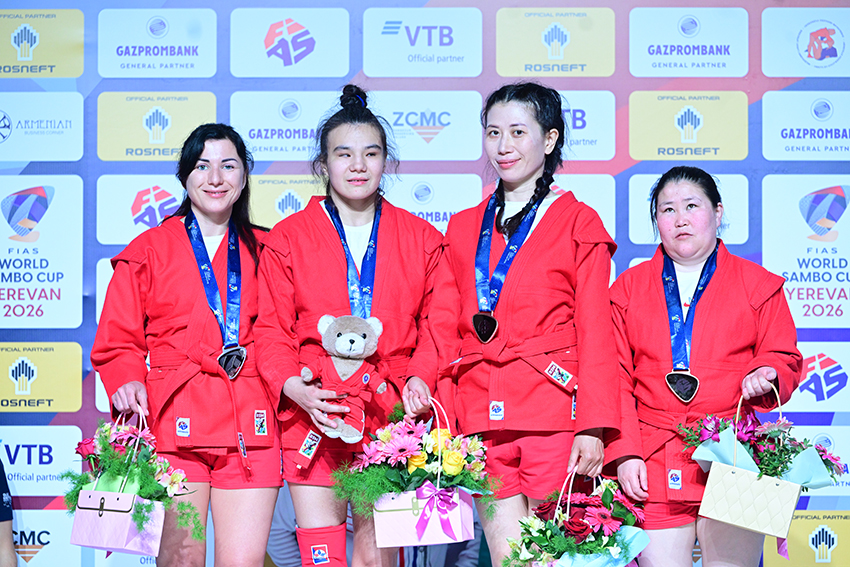
The Yerevan competition carried another point of significance: visually impaired athletes competed alongside sighted SAMBO athletes who have placed at national level of their countries. Nasyrova values that kind of integration – both as a driver of her own development and as a way of raising the profile of SAMBO among athletes with visual impairments.
On what comes next, she stayed deliberately vague. “I have dreams, but I'd rather not say them out loud – I don't want to jinx it.”
-
"Overcoming" 5 MayFIAS Backs Adaptive SAMBO Research Project for Children with Autism
-
"Overcoming" 29 AprilScott BAILEY: “What really stood out was the brotherhood you see through sport”
-
Did you see it? 18 DecemberSAMBO Federation Sri Lanka Meets with Minister of Youth Affairs and Sports
-
Federations 19 OctoberFirst Beach SAMBO Tournament Under Youth Development Project Held in Venezuela
-
Personalities 16 OctoberLucia Borregales and Luisaigna Campos on Their World Cadet, Youth & Junior SAMBO Championships Medal and Faith in Each Other
-
Anti-doping 15 OctoberITA to Host Webinar on Athlete Voice, Trust and Integrity in Sport
- Watch World Sambo Championships 2022. Bishkek, Kyrgyzstan 17 November 2022
-
Federations 19 OctoberFirst Beach SAMBO Tournament Under Youth Development Project Held in Venezuela
-
Personalities 16 OctoberLucia Borregales and Luisaigna Campos on Their World Cadet, Youth & Junior SAMBO Championships Medal and Faith in Each Other
-
Anti-doping 15 OctoberITA to Host Webinar on Athlete Voice, Trust and Integrity in Sport