
Vladimir YAPRINTSEV: “SAMBO Is My Foundation”
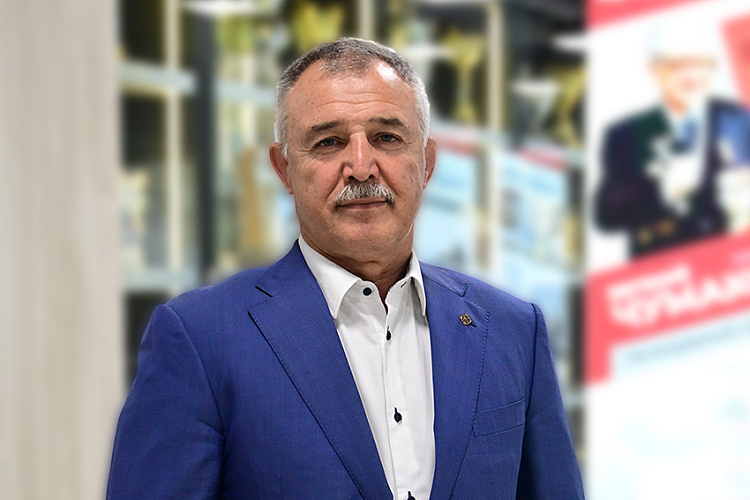
Vladmir Yaprintsev on his honorary membership in the FIAS Executive Committee, a forty-year friendship, and why a grey-haired man keeps showing up at children's gyms.
Last November, the FIAS Congress in Bishkek made a decision unprecedented in the federation's history: two veterans of international SAMBO – Belarusian Vladimir Yaprintsev and Italian Roberto Ferraris – became the first-ever honorary members of the FIAS Executive Committee. Both had travelled the full distance from the mat to the leadership of their national federations, and both had served in the Executive Committee for so long that they had exhausted every term permitted under the statutes. Yet SAMBO would not let them go. We spoke with Vladimir Yaprintsev – about what this role means to him personally, about his friendship with Roberto, about adaptive SAMBO, about masters competitions, and, of course, about what SAMBO really is.
– Vladimir Gennadyevich, tell us how the decision on honorary membership came about. Was it a surprise?
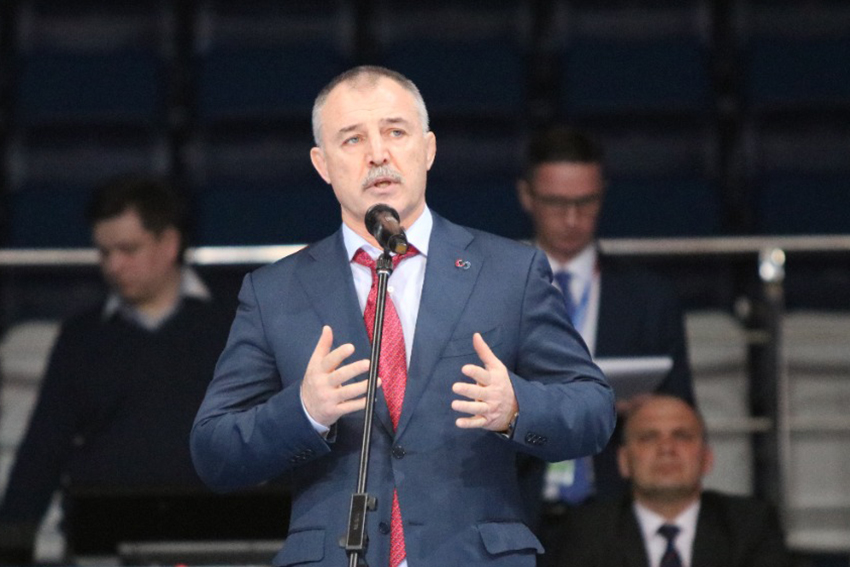
– It was a very pleasant surprise! Under the statutes, Roberto Ferraris and I had already used up all permitted terms on the Executive Committee and could no longer remain as active members. The International SAMBO Federation had actually been working on this question for some time. In the end, the members of the Executive Committee, led by President Vasily Shestakov, asked Roberto and me to stay on, in recognition of our contributions.
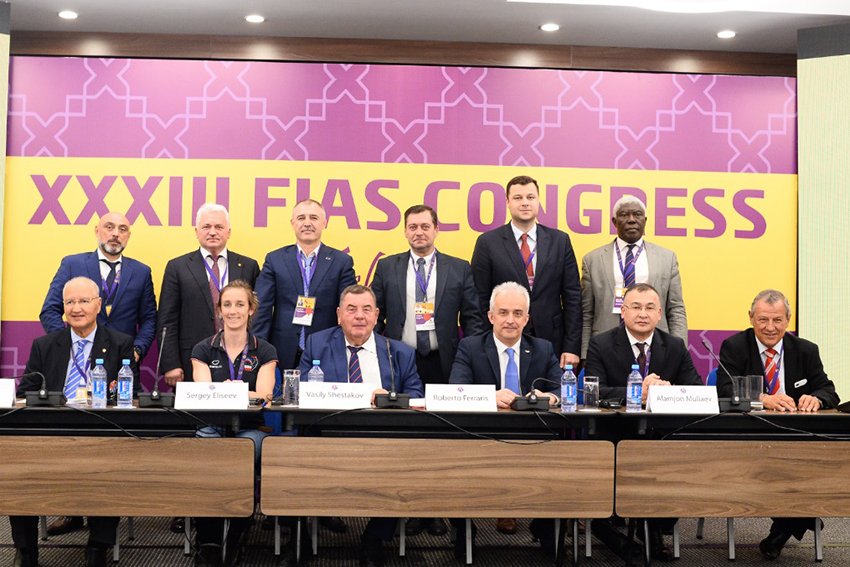
The Congress in Bishkek supported the proposal: to make us honorary members of the FIAS Executive Committee – for life. That is precisely the term written into the FIAS statutes for this position. It is the first such precedent in our federation's history, and I am deeply grateful to everyone who takes part in the international life of SAMBO. After all, we are all from SAMBO.
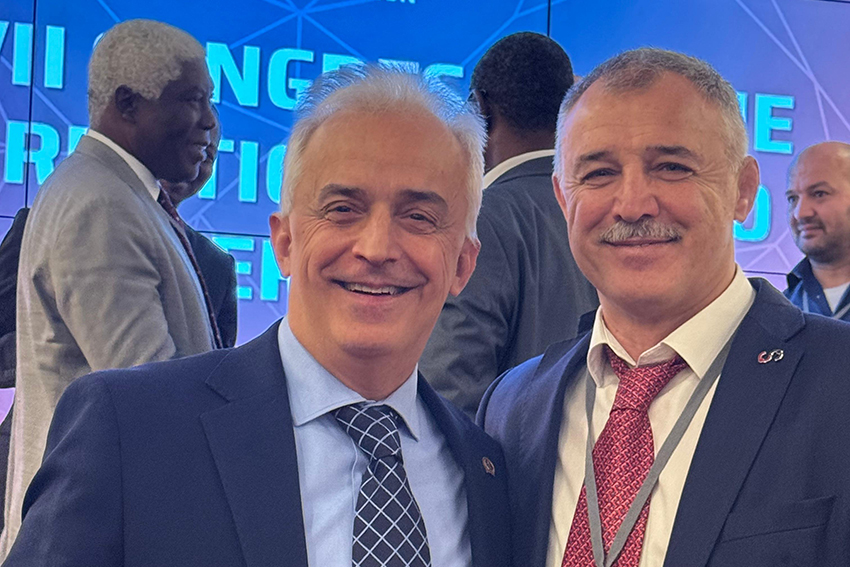
– You and Roberto Ferraris go back a long way…
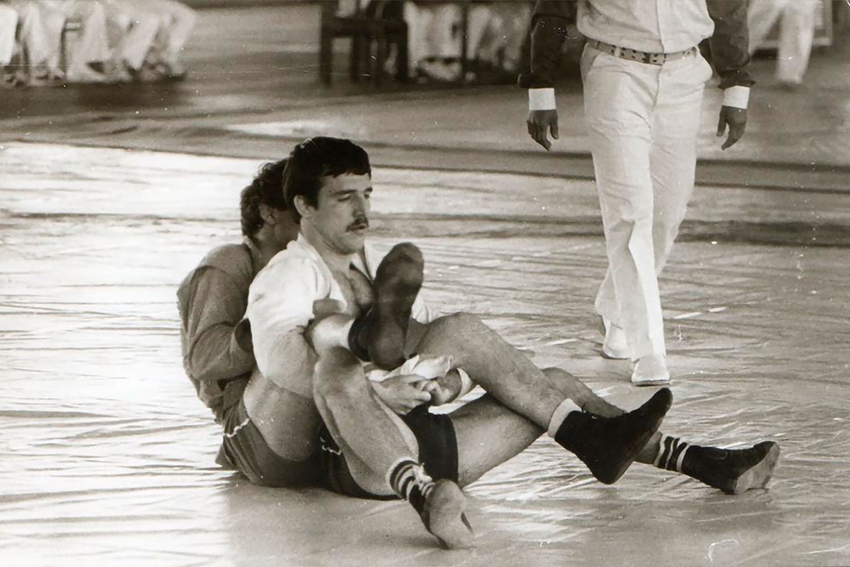
– To 1986. We first met at the European SAMBO Championships in Leningrad. He competed for the Italian national team, I competed for the Soviet Union. I was in the 68 kg category and became champion. Roberto competed at 57 kg and finished, I believe, fifth. Even then he was that way – inquisitive, curious, interested in everything.
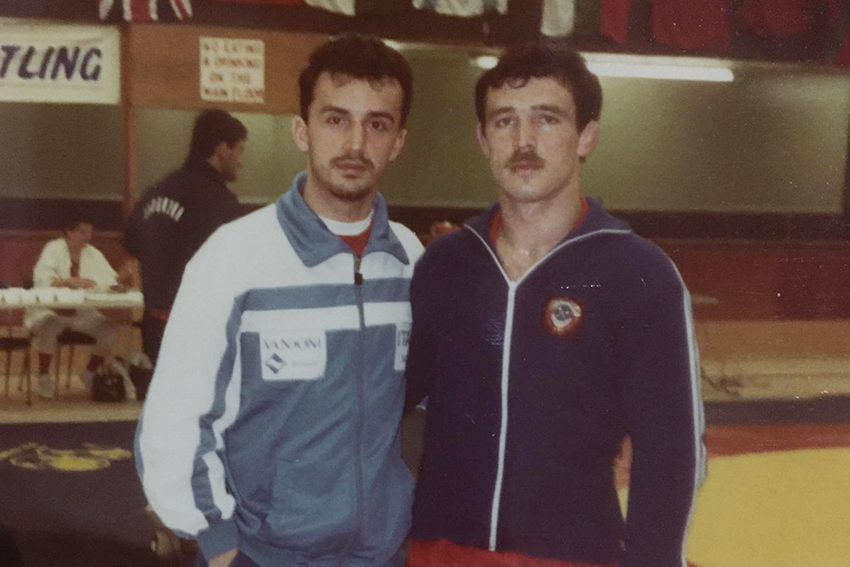
I remember everyone used to do a “change” back then – swap kit with opponents. But Roberto and I skipped that and simply gave each other gifts. After that we kept crossing paths – at World Championships, at the World Cup in Morocco, at international tournaments. He even came to visit me in Minsk. That's where he met his wife, as it happens.
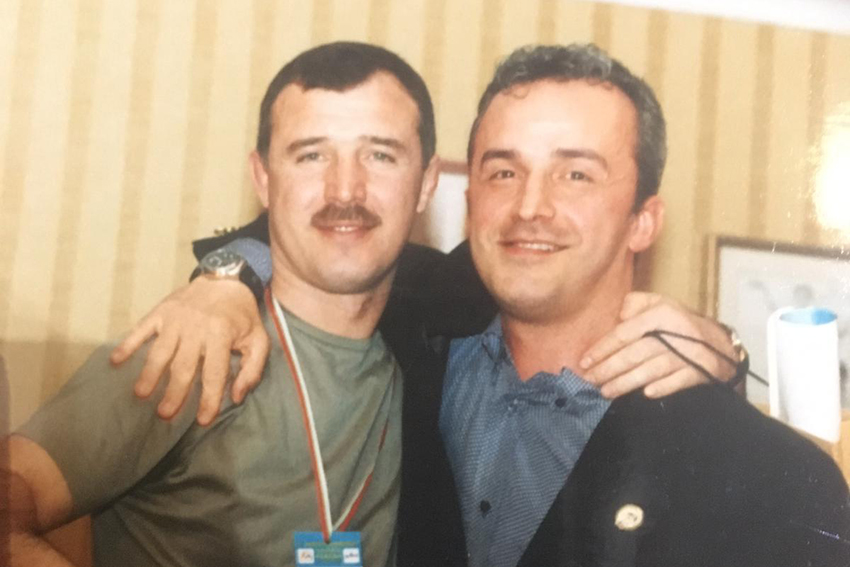
When we both finished competing, our paths ran parallel again: I became chairman of the Belarusian SAMBO Federation in 1994 and held that post until 2015. Roberto has long led Italian SAMBO and remains General Secretary of the European SAMBO Federation. We were both members of the FIAS Executive Committee, Roberto was the Secretary General of FIAS for a long time, and as federation officials we were constantly present at the biggest events in the world of SAMBO. We have walked the whole road side by side.
– This year brings the 50th World SAMBO Championships. What does that number mean to you personally?
– Every date means something. But fifty – that is half a century. For the fiftieth time, sambists from around the world will gather on one mat to decide who is the strongest. Think of how many people have become World Champions over that time – and every single one of them, in their year, was the best on the planet in their weight category. I want to take this opportunity to commend FIAS: despite all the turbulence the world is going through right now, we have held World Championships across every age group – cadets, juniors, youth, seniors – in Sport SAMBO, Beach SAMBO, and Combat SAMBO. We have not merely held our ground – we have grown. SAMBO for the blind and visually impaired has joined the program.
There is also something personally significant for me about the jubilee championships being held in Tashkent. That city matters to me: it was the first place I ever travelled to compete as a young athlete, where I won the All-Union Central Council of Trade Unions Championship among youth in the 52 kg category. Later I became Soviet champion there as well. Tashkent is a generous city, as the saying goes. I am confident they will host the competition at the highest level – because wrestling and combat sports mean more to Uzbekistan than just a sport.
– You mentioned SAMBO for the blind and visually impaired. What is your view of that discipline?
– The press always writes about heroes. And when genuine personalities emerge, attention follows naturally. That is exactly what happened here. When Roman Novikov appeared – the man who pulled SAMBO for the blind and visually impaired forward like a locomotive – other heroes followed, and interest in this discipline grew enormously.
Take Oleg Cretul from Moldova. A well-known judoka who was preparing for the Olympic Games – then a tragic turn of fate, and he lost his sight. Yet he stepped onto the mat. I remember at the 2017 World SAMBO Championships in Sochi, an athlete arrived from South America – without legs – and competed. The whole stadium gave him a standing ovation, and I am sure so did everyone watching at home.
After something like that, you are changed. When spectators watch a World Championship where SAMBO for the blind is part of the program, you hear them say: “If these guys get on the mat and wrestle like that, what excuse do I have for skipping training?” That is exactly the right question.
I believe that a man's life is made of overcoming. And these athletes are our brothers. Life is simply much harder for them than it is for us. So the last thing we are entitled to do is complain.
– This year Islam Makhachev became the second SAMBO Ambassador, following Fedor Emelianenko. What is your take on that?
– I loved the slogan on Khabib's shirt – that if SAMBO was easy, it would be called something else. Absolutely right. And to Islam – thank you. He has taken on a responsibility: now, every time he steps into the MMA cage, he carries the name of SAMBO with him. Because there is nothing stronger than SAMBO in combat sports – I believe that one hundred percent.
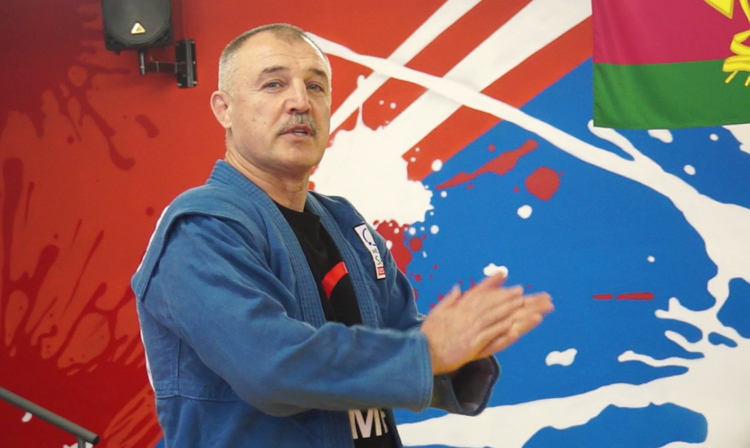
And do you know what sets Combat SAMBO apart from MMA? We do not strike a downed opponent. If your opponent goes to the ground, you follow him down or bring him back up – you do not finish him on the mat. There is something noble in that. I genuinely believe it.
– You continue to get on the mat yourself – in masters competitions and in training. What keeps you going?
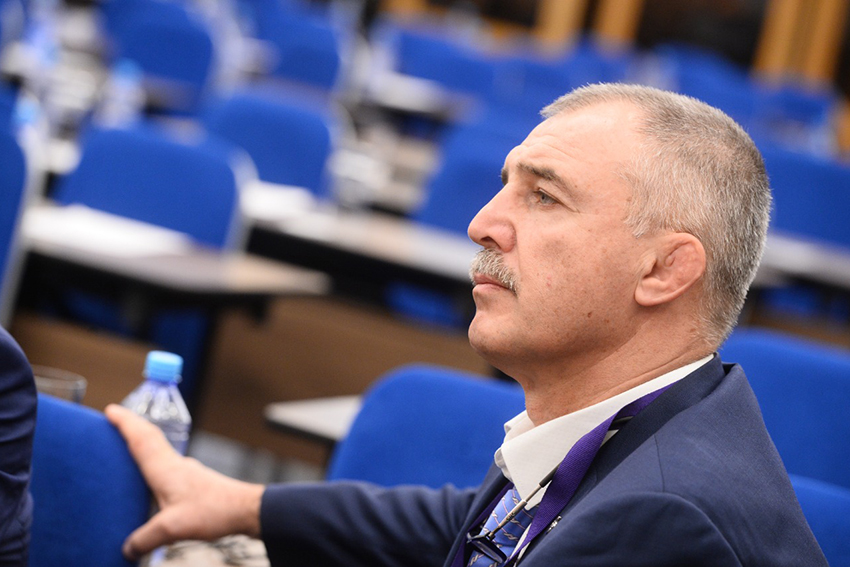
– A man does not finish at 30 or 40. A man is measured not by his words but by his actions. A man of 60 or 70 who steps onto the mat without fear and shows what he can do – that means something.
Let me tell you one story. I was at a World Masters SAMBO Championships with Aslamback Akhmedovich Aslakhanov – he was 65 at the time and had arrived injured. I said: why did you come in this condition? He said: “I want my son Damir to see that his father can still be a man at this age.” His son was five years old. That is an example.
What else strikes me about masters competitions – I prefer that name to “veterans”, because they really are masters – is what happens after every bout. They always embrace. I have never once seen masters finish a match and just walk away. The harder the bout, the tighter the hug. That, I think, is the real meaning of these competitions.
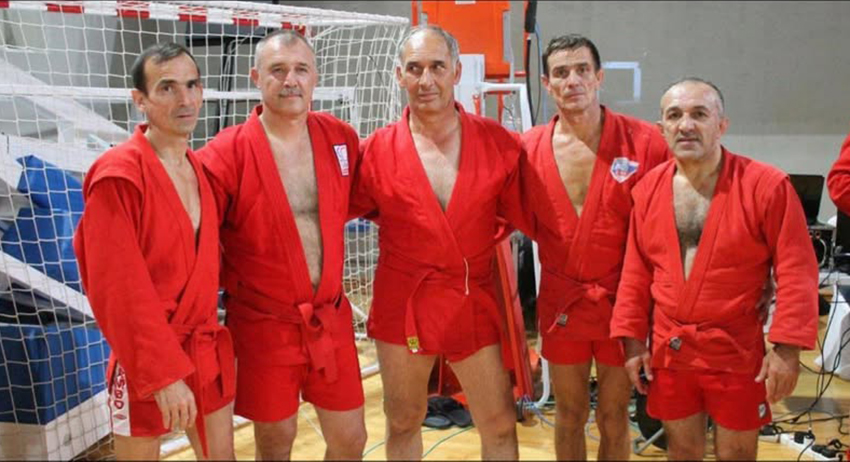
This year the World Masters Championships will be held in Cyprus. I intend to go. National teams do not compete there – it is every individual who wants to step on the mat and has the ability to do so. That makes it a true celebration.
– Tell us about your project “We Are from SAMBO”. What is happening with it now?
– This project belongs to all sambists in the world. We deliberately put no legal restrictions on the brand – let it go to the people. We have no interest in monetising it, because this is our life.
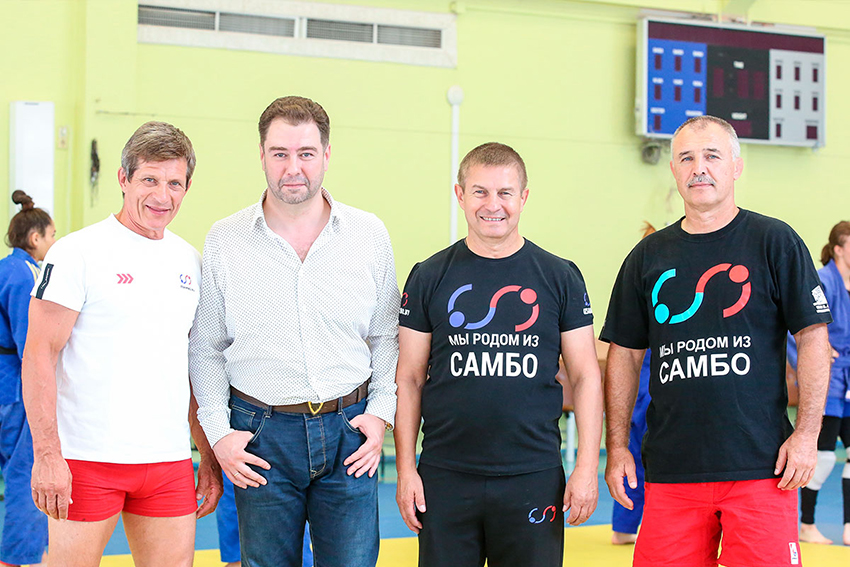
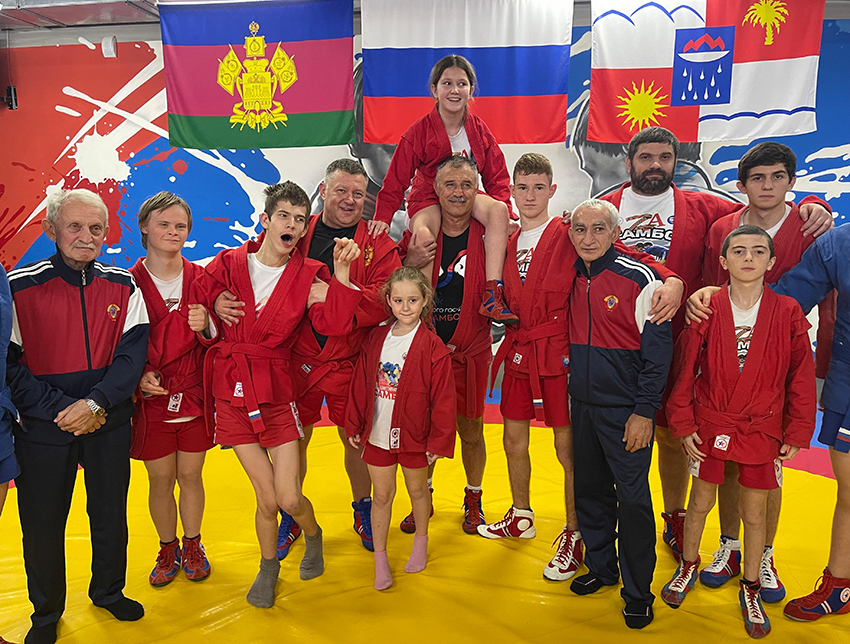
Within the project we organize competitions – youth competitions above all. We were recently in Grodno. Before that – Brest, Makhachkala, Grozny, Sochi, Irkutsk. Wherever we end up, I consider it my civic duty to pass on what I know to those who want it. I always look for a chance to hold a masterclass for young athletes.
Anyone who has ever put on a SAMBO jacket, anyone who has ever stepped onto the mat, can call themselves part of “We Are from SAMBO”. I am proud that so many people who have made their mark in life – across every field of endeavour – are sambists.
– You travel to give masterclasses to children. What do you tell them?
– I always tell the children: your coaches know SAMBO as well as I do, but perhaps I can share a few of our secrets. And I tell them why they come to training. Not to learn throws and sweeps – you will learn those regardless. You come to learn how to be a friend, and how to be there for a friend when things get hard.
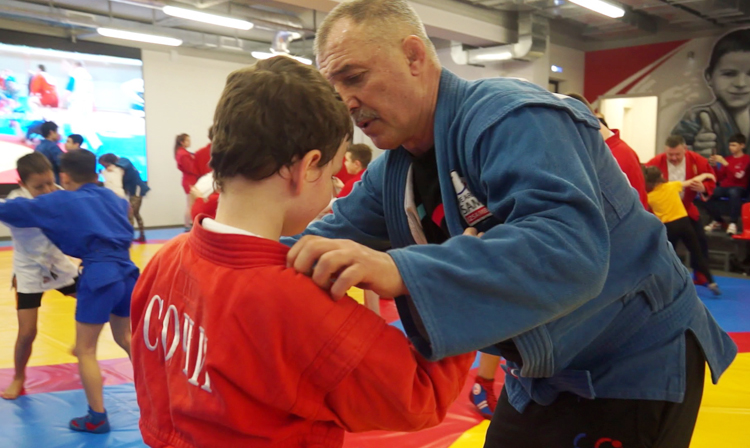
I often do this exercise with them: they approach each other, look one another in the eye – calmly, without aggression, the way a man who is sure of himself looks at a friend – and then they embrace. I tell them: breathe each other in. Because sambists are the most tight-knit people in sport. If a proper young man washes his own kit, then his training partner knows his smell better than his mother does. That is why we are so close.
There are funny moments too. I walk into a gym and nobody has any idea who this grey-haired fellow is. I train with the kids, and then a parent comes over: “Excuse me, do you give private lessons? What do you charge?” I say: it's expensive. They say: “Don't be modest, name any price.” I say: you won't be able to afford it. I am turning 65, I have been doing this since I was 12 – do the maths. So I only give training sessions for free, and only where I choose. We always bring gifts with us – “We Are from SAMBO” T-shirts, tracksuits. Then sometimes someone looks up my name – and: “Vladimir Gennadyevich, I am so sorry, I had no idea…” It is always good fun.
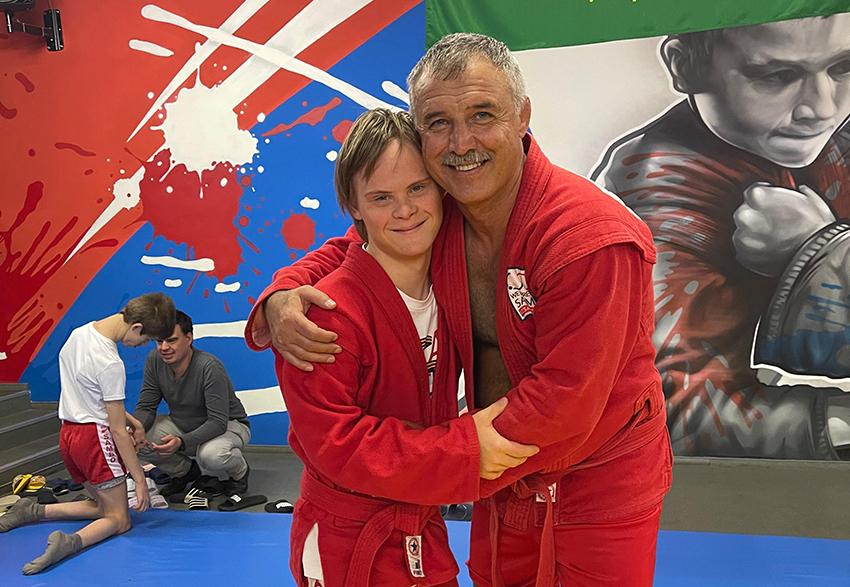
And once we came to Sochi to work with the adaptive SAMBO group – children with autism, with cerebral palsy. I was the first through the door, and they came running at me. One of them shouted: “Uncle!” And I just stood there – and the tears came. I immediately started wrestling so they wouldn't see. I simply cannot hold it together in moments like that. You look and you see: this boy couldn't walk – they had cut his tendons to stretch them. And he says: “I want to be a champion so much.” With his diagnosis. You come out of that cleaner than when you went in. You honestly cannot tell who benefits more – them or you.
– One last question. What is SAMBO to you?
– SAMBO is my happy childhood. It is every stage of my life. I was recently at the theatre watching a performance with Oleg Menshikov – he connected the chapters of his life to music. For me it is the same, only with SAMBO. A small boy training in socks and an old jacket. Then SAMBO getting more serious, learning to manage my weight. Then the choice between studies and SAMBO. All of that is my life.
And here is the thing: the moment I step away from SAMBO, something goes out of balance. I drift somewhere, things stop going the way they should. SAMBO is my foundation. Archimedes said: give me a place to stand. My place to stand is SAMBO.
-
"Overcoming" 5 MayFIAS Backs Adaptive SAMBO Research Project for Children with Autism
-
"Overcoming" 29 AprilScott BAILEY: “What really stood out was the brotherhood you see through sport”
-
Did you see it? 18 DecemberSAMBO Federation Sri Lanka Meets with Minister of Youth Affairs and Sports
-
Federations 23 OctoberSAMBO in Indonesia: Salatiga Tournament Highlights Regional Growth of the Discipline
-
Personalities 21 OctoberFedor Emelianenko and Islam Makhachev to attend World SAMBO Championships in Tashkent
-
President 21 OctoberSAMBO exhibition opens at Moscow Railway Station in Saint Petersburg ahead of 50th World SAMBO Championships
- Watch World Sambo Championships 2022. Bishkek, Kyrgyzstan 17 November 2022
-
Federations 23 OctoberSAMBO in Indonesia: Salatiga Tournament Highlights Regional Growth of the Discipline
-
Personalities 21 OctoberFedor Emelianenko and Islam Makhachev to attend World SAMBO Championships in Tashkent
-
President 21 OctoberSAMBO exhibition opens at Moscow Railway Station in Saint Petersburg ahead of 50th World SAMBO Championships